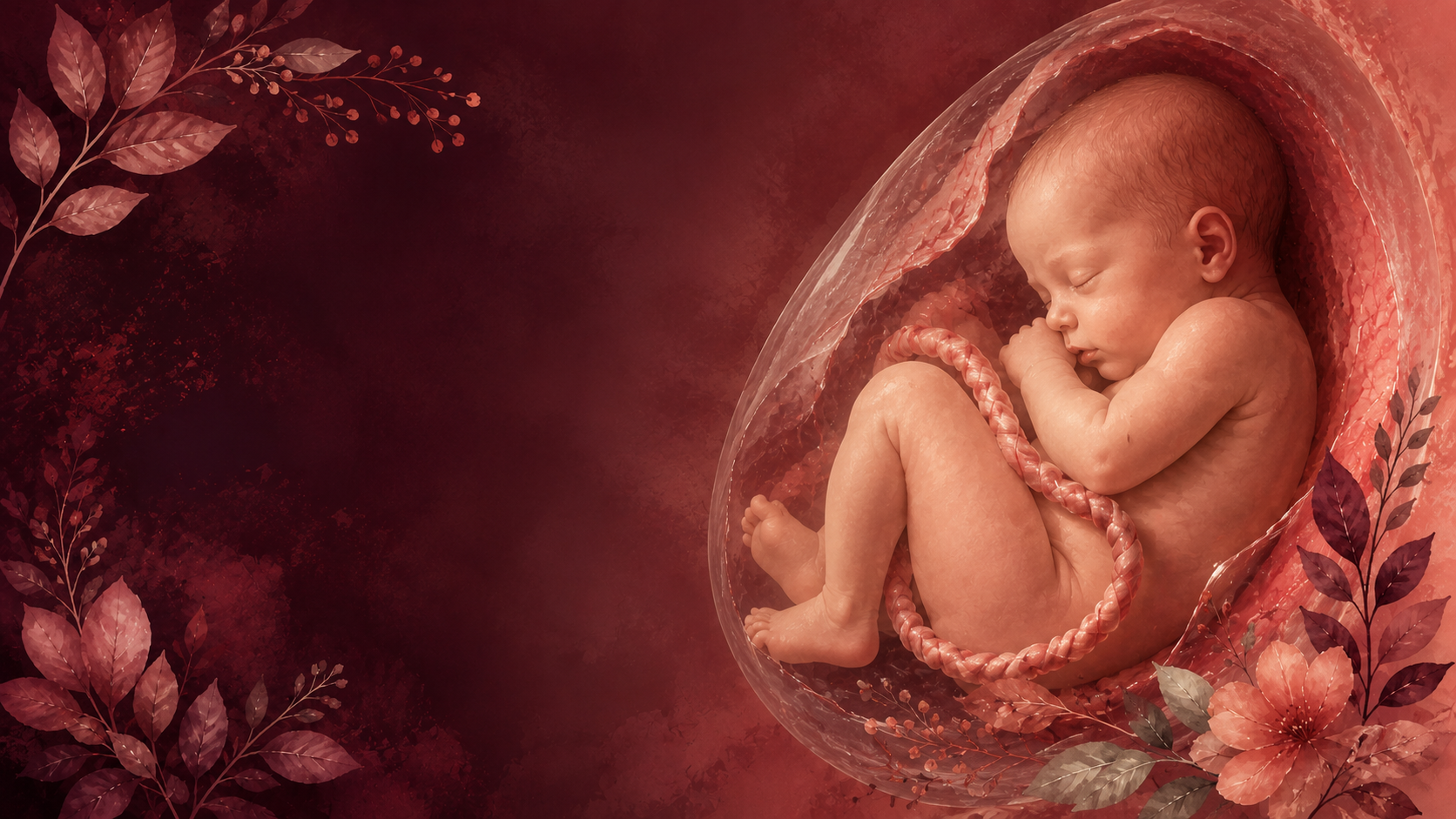
When a woman walks into one of our clinics, she’s often making the most consequential decision of her life — not just for herself, but for the child growing inside her. Understanding what’s happening in her body during the second trimester helps us meet her where she is with clarity, compassion, and truth.
In the First Trimester Development article, we explored how a single fertilized egg developed into a fetus with a beating heart and all of its major organs beginning to form. As we continue following fetal development week by week, the second trimester shifts from early formation to rapid growth as your baby becomes more active, develops the senses, and prepares for life outside the womb.
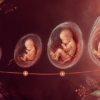
Second Trimester Timeline
Weeks 14–16: Rapid Growth Begins
The baby begins growing quickly. The neck becomes more defined, facial muscles develop, and tiny movements become more coordinated. The fetus is about the size of a lemon. Major organs have formed and are beginning to function more independently. The baby’s skeleton, initially made of cartilage, is hardening into bone.
What’s Developing:
- Facial features become distinct — eyes move closer together, ears shift into position
- Gender becomes visible on ultrasound (though not always detectable until week 18–20)
- Reflexes develop — the baby can suck their thumb, make grasping motions, and squint
- The placenta is fully functional, providing oxygen and nutrients
According to the American College of Obstetricians and Gynecologists (ACOG), this is when many women begin to feel physically better as early pregnancy symptoms like nausea subside.
Weeks 17–20: First Movements
This is one of the most memorable stages of pregnancy. Many women begin feeling quickening — the baby’s first noticeable kicks and movements. For many mothers, this is the moment pregnancy shifts from abstract to undeniably real. That flutter isn’t just movement — it’s the baby saying, I’m here.
The baby’s skeleton continues strengthening while muscles become more coordinated.
What’s Developing:
- The nervous system matures, allowing more coordinated movement
- The baby is about 6 inches long and weighs close to 10 ounces
- Sensory development accelerates — taste buds form, and the baby begins swallowing amniotic fluid
- Fingerprints develop — unique patterns that will remain for life
- Hair begins to grow on the scalp and eyebrows.
The Mayo Clinic notes that this is also when many women have their mid-pregnancy ultrasound, often called the “anatomy scan,” which checks the baby’s development in detail.
Weeks 21–24: Senses Develop
The baby is now about a foot long and weighs around one pound. This is a critical window: by the end of this period, the baby is approaching viability — the point where survival outside the womb becomes possible with advanced medical care.
The inner ear becomes more developed, allowing balance to improve, while hearing becomes sensitive enough to recognize voices and sounds from outside the womb.
Tiny eyebrows and eyelashes become visible, and sleep cycles begin to develop.
What’s Developing:
- Rapid brain development — millions of new neural connections form daily
- Lungs begin producing surfactant, a substance necessary for breathing air after birth
- The baby can hear sounds from outside the womb, including the mother’s voice
- Sleep and wake cycles emerge — the baby has periods of rest and activity
- Skin is still translucent but beginning to thicken
According to ACOG, babies born at 24 weeks have about a 60–70% chance of survival with intensive neonatal care, though outcomes improve significantly with each additional week in the womb.
Weeks 25–27: Preparing for the Third Trimester
During the final weeks of the second trimester, the baby’s lungs and brain continue developing rapidly. While the lungs are not yet fully mature, they are practicing movements necessary for breathing after birth.
The nervous system becomes increasingly sophisticated as connections within the brain multiply.
What’s Developing:
- Lungs continue maturing.
- The brain forms millions of new neural connections daily, preparing for sensory processing and coordination.
- Eyes begin responding to light.
- Reflexes improve.
- Body fat slowly begins accumulating.
Every Week Matters
The second trimester is filled with milestones that reveal just how remarkably complex fetal development is. From hearing familiar voices to kicking, swallowing, sleeping, and forming lifelong fingerprints, each week brings incredible growth.
Understanding these stages offers a greater appreciation for the remarkable process of human development.
The second trimester is where many abortion-minded women experience the “it’s real” moment — when the baby kicks, when the ultrasound shows a face, when the pregnancy stops being abstract.
Want to be part of the care that makes abortion obsolete?
Partner with us to bring life-affirming support to women in your community.
In the Third Trimester Development article, we’ll explore the final weeks of pregnancy as the brain and lungs mature, healthy weight is gained, and the baby prepares for birth.
For the women we serve, this is the season of anticipation and action — finalizing plans, gathering resources, and stepping into the identity of mother. And for our network of clinics, mentors, and church partners, it’s the season of staying present — ensuring she’s not just supported through pregnancy, but prepared for the life ahead.
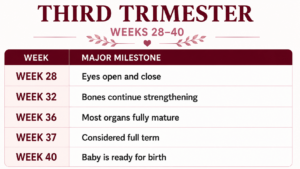
➡️ Read our complete guide: Third Trimester Fetal Development: Weeks 28–40
Amazing Second Trimester Facts
- Many mothers feel their baby’s first kicks between 16 and 20 weeks.
- By about 18 weeks, fingerprints are fully developed and remain unique for life.
- Around 20 weeks, babies can hear sounds from outside the womb, including familiar voices.
- Babies spend much of the second trimester practicing movements they’ll use after birth—including swallowing, stretching, and even hiccupping.
- By the end of the second trimester, the brain is forming millions of new neural connections every day.
Frequently Asked Questions
When do babies start kicking?
Many women first notice movement between 16 and 20 weeks, although first pregnancies often feel movement slightly later.
Can my baby hear me during the second trimester?
Yes. Around 20 weeks, babies begin hearing sounds from outside the womb. As hearing develops, they can recognize familiar voices, including their mother’s.
Is my baby's brain still developing?
Absolutely. Brain development continues throughout pregnancy and after birth, with rapid growth occurring during both the second and third trimesters.
Is it safe to exercise during the second trimester?
Yes. ACOG recommends moderate exercise for most pregnant women, including walking, swimming, and prenatal yoga. Always consult your healthcare provider.
Sources:
- American College of Obstetricians and Gynecologists (ACOG) — Fetal Development Timeline https://www.acog.org/womens-health/faqs/how-your-fetus-grows-during-pregnancy
- Mayo Clinic — Fetal Development: The 2nd Trimester. https://www.mayoclinic.org/healthy-lifestyle/pregnancy-week-by-week/in-depth/fetal-development/art-20046151
- National Institutes of Health — https://www.nichd.nih.gov/health/topics/pregnancy/conditioninfo/fetal-growth-development